
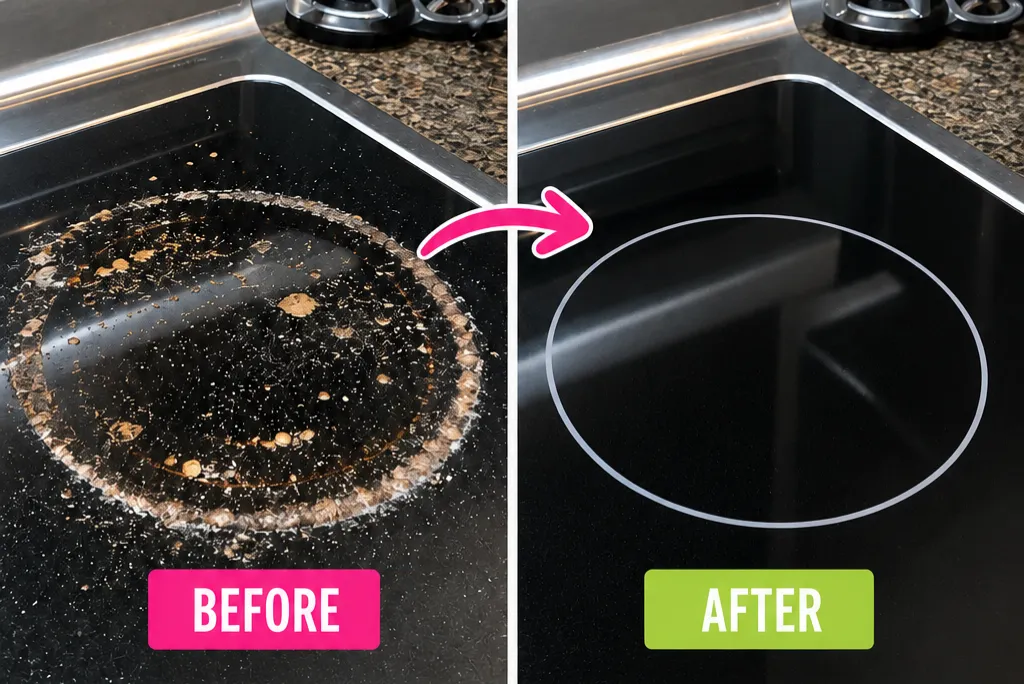
Ever wiped down your glass stove top and still seen those stubborn cloudy streaks staring back at you? Or worse, a burnt-on spill that just won’t budge no matter how hard you scrub? Glass stove tops look sleek when they’re spotless, but one splatter of tomato sauce or boiled-over milk and suddenly it feels impossible to get that showroom shine back.
The good news is you don’t need expensive stove top cleaners or risk scratching the glass with the wrong tools. A few basic ingredients and the right technique will get it looking brand new again.
This post contains affiliate links. If you buy through these links, I may earn a commission at no extra cost to you.
Forget Baking Soda and Vinegar, Try This Instead
Baking soda and vinegar works fine for light, everyday grease and general dullness, no doubt about that. But for anything actually baked on, a spill that’s hardened into a crusty patch, it takes a lot of scrubbing and doesn’t always fully lift it. The method that’s taken over cleaning TikTok, and genuinely does a better job specifically on stubborn, burnt spots, is the hot towel and razor scraper trick. It sounds intense, but it’s actually one of the gentlest and most effective ways to lift grime off glass without scrubbing at all.
What You’ll Need
- What You’ll Need
- A clean towel or dish cloth
- Hot water
- Dish soap
- A stove top razor blade scraper
- A soft microfiber cloth
I stopped using a butter knife after it left a mark. Now I just use a proper stove top scraper that sits flat and angled to lift the burnt stuff instead of gouging the glass.
Let’s Get That Shine Back
Step One: Make sure the stovetop is completely cool before you start. Cleaning it while it’s still hot isn’t just risky for you, a sudden splash of cold water or a damp cloth on hot glass can cause thermal shock and crack the surface.
Step Two: Soak your towel in hot water, wring it out so it’s damp but not dripping, and lay it flat over the entire stovetop. Let it sit for 5 to 10 minutes. This steam softens even old, hardened spills so they lift off instead of fighting you.
Step Three: Remove the towel and add a small squirt of dish soap directly onto the surface, focusing on the worst spots.
Step Four: Hold your scraper at a low, almost flat angle against the glass, never straight down, and gently push forward under the softened residue. You’ll feel it lift away in one smooth motion instead of chipping off in stubborn bits.
Step Five: Wipe the loosened grime away with a damp cloth, then go over the whole surface once more with clean water to catch anything left behind.
Step Six: Finish with a dry microfiber cloth, buffing in circular motions until the glass is streak free and shining.
A Few Habits That Keep It Looking New
Wipe up spills as soon as it’s safe to, once the burner is off and the surface isn’t scorching hot. If it’s still very hot, let it cool for a minute or two first, a sudden splash of cold water or a cold cloth on hot glass can cause thermal shock and crack it.
For anything you can safely reach right away, a quick wipe stops it from baking on in the first place. Lift your pots and pans instead of sliding them across the glass. Stick to cookware with a flat, smooth base, since uneven pans are one of the most common causes of scratches in the first place. And keep that scraper nearby, so tough spots never get the chance to turn into a ten minute project.
If you’re dealing with a deep scratch, a crack, or a stain that simply won’t lift no matter what you try, that’s no longer a cleaning issue. A cracked glass stove top is a safety concern, and it’s worth having it looked at by a professional rather than continuing to use it.
Frequently Asked Questions
Is a razor blade scraper actually safe for glass stove tops?
Yes, as long as you hold it at a low, flat angle and never scrape straight down. It’s specifically designed for this, most manufacturers actually recommend one for baked on residue.
Can I use this method on a stovetop that’s still slightly warm?
No, always wait until it’s fully cooled. Cleaning a warm surface can cause streaking, and pouring cold water or wiping with a cold cloth while it’s still hot can crack the glass.
How often should I be doing the full deep clean?
Once a week is plenty for most households, or anytime you notice a spill has hardened and a quick wipe isn’t lifting it anymore.