
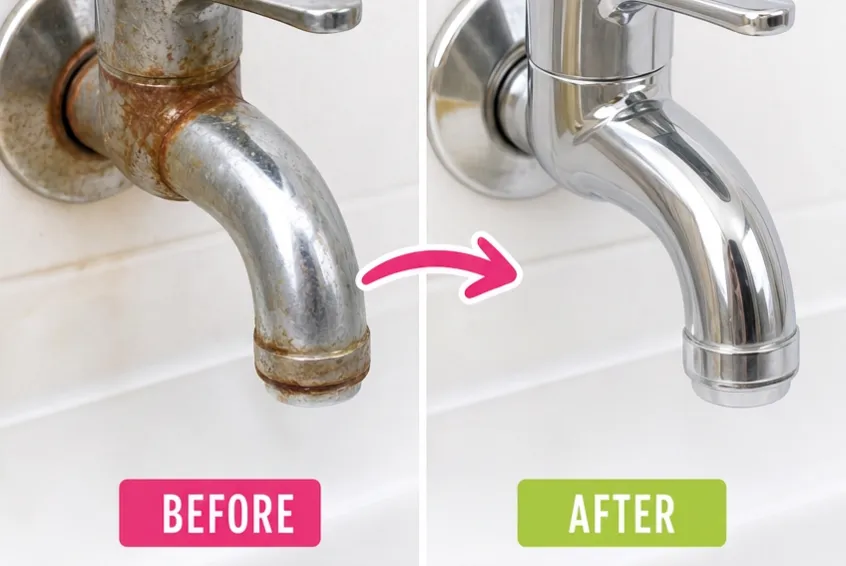
That orange-brown streak creeping across your faucet isn’t hard water, and no amount of vinegar soaking seems to touch it. Here’s why, rust isn’t a tougher version of a water stain, it’s a completely different kind of buildup, and that’s exactly why the usual tricks keep failing.
If you’re trying to remove rust stains from faucets, the first thing to know is that rust comes from iron, not minerals, and it needs a stronger acid to break it down. The good news is once you know that, the fix is simple, and you probably already have what you need in your kitchen.
This post contains affiliate links. If you buy through these links, I may earn a commission at no extra cost to you.
Rust or Hard Water? Here’s the Difference
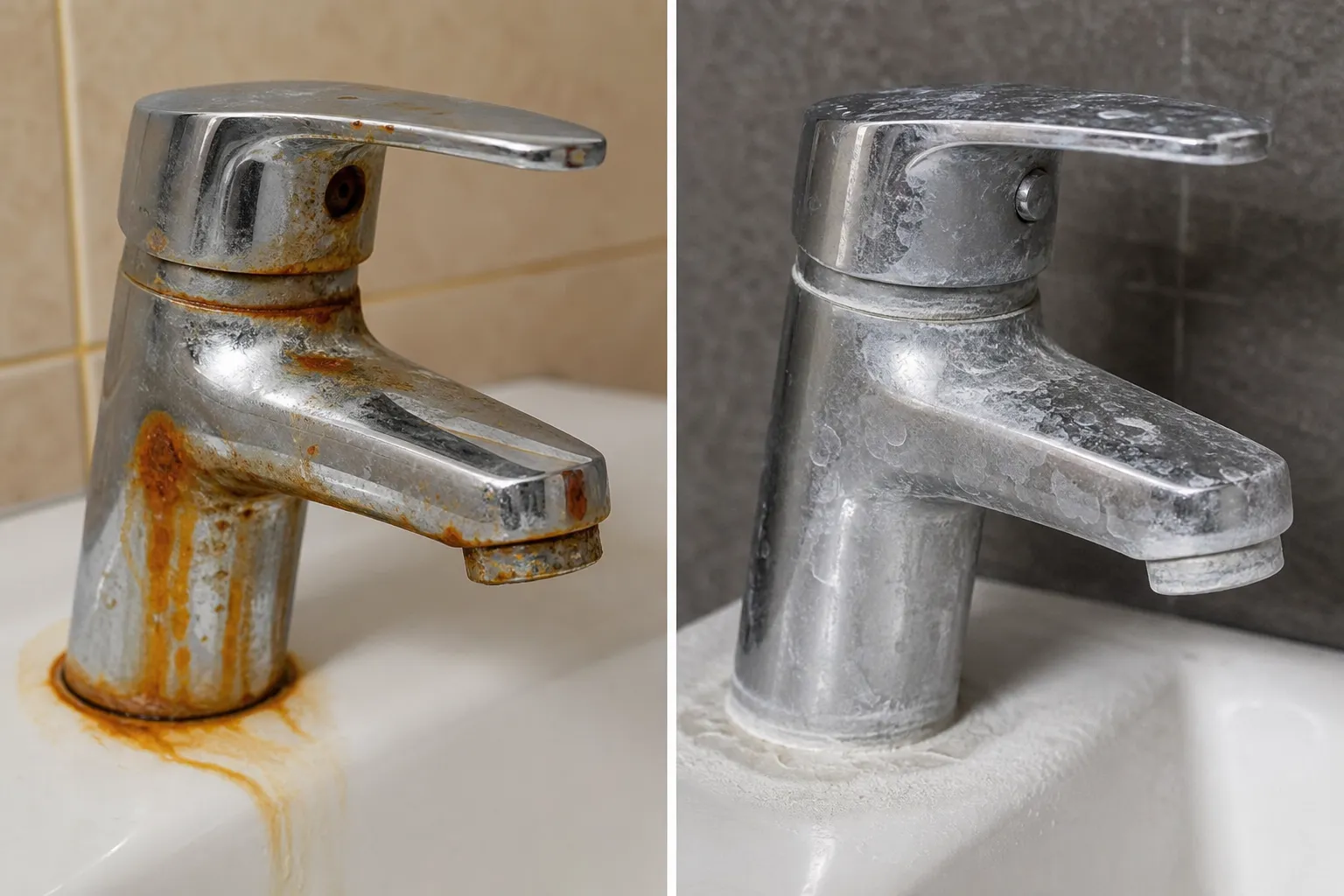
Hard water stains are usually white, chalky, and powdery. Rust stains are orange, reddish-brown, and often look like they’re bleeding into the surface rather than sitting on top of it. Rust typically comes from a leaky washer, a corroding pipe, or iron in your water supply. Knowing which one you’re dealing with matters, because rust needs an acid strong enough to actually break down iron oxide, not just dissolve mineral deposits.
What You’ll Need
- A fresh lemon
- Salt
- Baking soda
- An old toothbrush
- A soft cloth
- Rubber gloves
Skip bleach entirely here. It reacts with rust and can actually set the stain deeper instead of lifting it.
How to do it:
Step One: Cut a lemon in half and dip the cut side into a small pile of salt. The citric acid works on the rust while the salt adds gentle scrubbing power.
Step Two: Rub the lemon directly over the rust stain, pressing lightly and re-dipping in salt as needed. Let the juice sit on the stain for about 5 minutes so the acid has time to work.
Step Three: Scrub the area gently with an old toothbrush, then rinse and wipe dry to check your progress. Light rust often lifts completely at this stage.
Step Four: For stains that are still hanging on, make a paste with baking soda and a few drops of water. Spread it over the rust, let it sit for about 10 minutes, then scrub again with your toothbrush.
Step Five: Rinse thoroughly and dry the faucet with a soft cloth.
What About Rust That Just Won’t Come Off?
For set in or older rust stains, lemon and baking soda alone may not be enough. This is where an oxalic acid based cleaner makes the real difference, it’s formulated specifically to break down rust without damaging most faucet finishes, and it works noticeably faster on stubborn spots than any homemade method. Apply it according to the product’s instructions, let it sit for a couple of minutes, then wipe clean with paper towels.
Read more : How to remove hard water stains from a faucet
Why Does Rust Keep Coming Back?
If a rust stain returns within weeks of cleaning it, the source usually isn’t the faucet itself, it’s what’s feeding it. A slow drip from a worn washer, corroding pipes, or high iron content in your water supply are the most common causes. Fixing the drip or getting your water tested is the only way to stop the stain from reappearing again and again.
How Often Should You Be Doing This?
You don’t need to wipe your faucet after every single use, that’s not realistic for most households. A quick wipe down once a day, or even every couple of days, is enough to stop water from sitting against the metal long enough to cause rust. If you’re dealing with a slow drip, that’s a different story, standing water from a leak builds up rust far faster than normal daily use, so that’s worth fixing right away rather than waiting.
For the actual rust removal routine, doing it as soon as you spot a new stain is the best approach. Catching it early means a quick lemon scrub is usually enough, instead of needing the stronger oxalic acid cleaner for something that’s had weeks to set in.
When It’s More Than a Stain
If rust keeps appearing no matter what you try, or you notice pitting where the metal surface has become rough or uneven, that’s beyond a simple cleaning fix. Pitted metal can’t be restored, and it’s worth having a plumber check your pipes for corrosion before it leads to a bigger leak.
Frequently Asked Questions
What’s the easiest way to remove rust stains from faucets?
A lemon and salt scrub is the easiest starting point for most households. It’s gentle, uses things you likely already have, and works well on light to moderate rust.
Can I use vinegar to remove rust stains from faucets?
Vinegar can help with very light rust, but it’s much better suited to hard water mineral deposits. For genuine rust, lemon and salt or an oxalic acid cleaner will get noticeably better results.
Why shouldn’t I use bleach on rust stains?
Bleach reacts chemically with iron oxide and can darken or set the stain instead of removing it. It’s one of the few cleaners that can make a rust stain worse.
Will rust stains damage my faucet permanently?
Not usually, as long as they’re treated before they sit for a long time. If rust has been left untreated for months or years, it can eventually pit the metal underneath, and that damage can’t be reversed.