
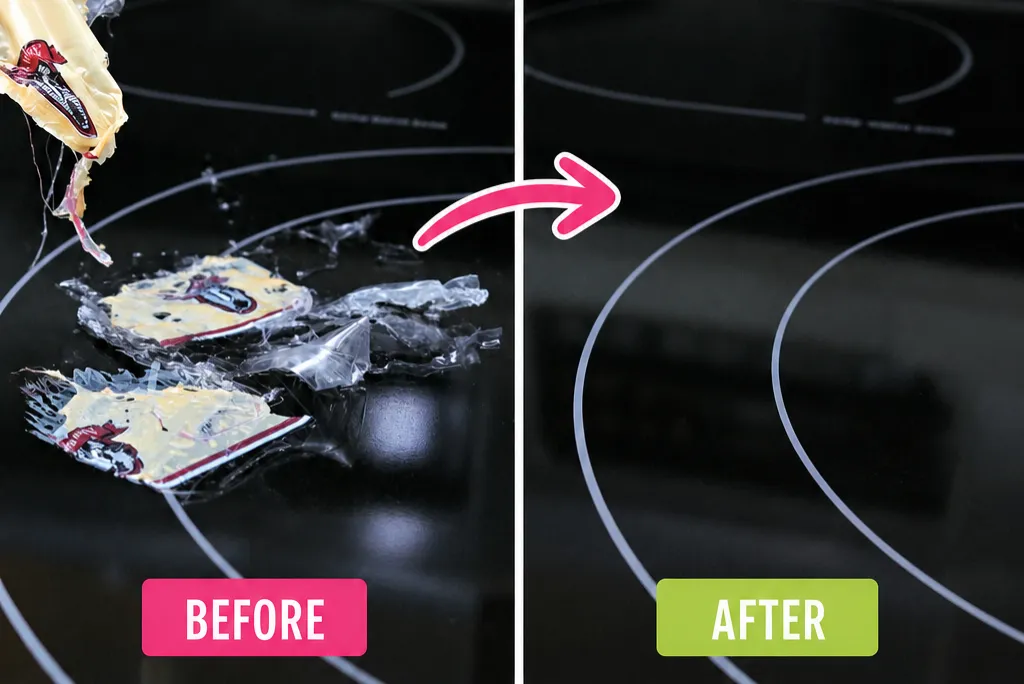
That sinking feeling when you smell something burning, turn around, and realize the plastic container or bread bag you left near the burner has melted into your glass stove top. Your heart drops. You wonder if the stove is ruined.
Take a breath, because it almost never is. The fix doesn’t need heat, ice, or harsh chemicals. Just a little patience and two things from your kitchen.
This post contains affiliate links. If you buy through these links, I may earn a commission at no extra cost to you.
What You’ll Need
- Olive oil
- Baking soda
- A plastic scraper or an old gift card
- A gentle scouring paste
- A damp sponge
- Glass top cleaner
I personally use this plastic razor scraper kit from Amazon for this job – it’s way better than an old gift card and won’t scratch your cooktop.
Let’s Get It Off
Step One: Turn off every burner and let the glass cool down completely. Open a window or switch on the exhaust fan if there’s still a burnt smell in the air.
Step Two: Drizzle olive oil generously over the melted plastic and rub it in with a soft cloth. Make sure every bit of plastic is covered.
Step Three: Sprinkle baking soda over the oil until it forms a thick, spreadable layer. Leave it to sit for 10 to 15 minutes. This is the step that does the heavy lifting, since the oil works its way under the plastic and loosens its grip on the glass.
Step Four: Gently push your plastic scraper or old gift card against the edge of the plastic at a low angle. It should start lifting in strips or chunks. Take your time and let the tool glide, don’t force it.
Step Five: For any thin film that’s left behind, put a small amount of gentle scouring paste on a damp sponge and rub in soft circles with light pressure. This is the viral TikTok finishing trick for plastic that seems to have melted into the glass.
Step Six: Wipe the surface with a damp cloth and a little dish soap to remove all the oil and residue, then finish with a glass top cleaner and buff dry for a streak free shine.
What If the Plastic Is Really Stubborn?
Thick or old plastic may need a second round. Reapply the oil and baking soda, wait another 10 to 15 minutes, and scrape again in small sections. Patience beats pressure every time.
If a tiny bit still won’t budge, you can finish the job with a razor scraper. Hold it almost flat against the glass, at a very low angle, and gently push it under the edge of the plastic. Never press the corner of the blade straight down into the glass, and always use light, slow strokes so the blade glides instead of digging in. Wipe the area clean once the plastic lifts off.
Keep It From Happening Again
Glass stays hot long after the burner is off, so it’s easy to set something down a little too early. Check that the surface is cool before placing anything on it, keep plastic bags and containers away from the stove, and swap plastic utensils for silicone or wooden ones.
If you notice pitting, deep marks, or cracks in the glass where the plastic melted, stop using that burner and get it checked. Damaged glass can be a safety issue, and it’s not something to keep cooking on.
Frequently Asked Questions
Does olive oil really help remove melted plastic?
Yes, the oil seeps under the edges and loosens the plastic’s grip on the glass, which makes scraping much easier and gentler.
Will this scratch my glass stove top?
Not if you use a plastic scraper and light pressure. Scratches usually come from metal blades used at a steep angle or from rough scrubbing pads.
Why can’t I use a hair dryer, ice, or hot water to speed things up?
Sudden temperature changes are what put glass at risk of cracking. Keeping everything at room temperature is the safer way to go.