
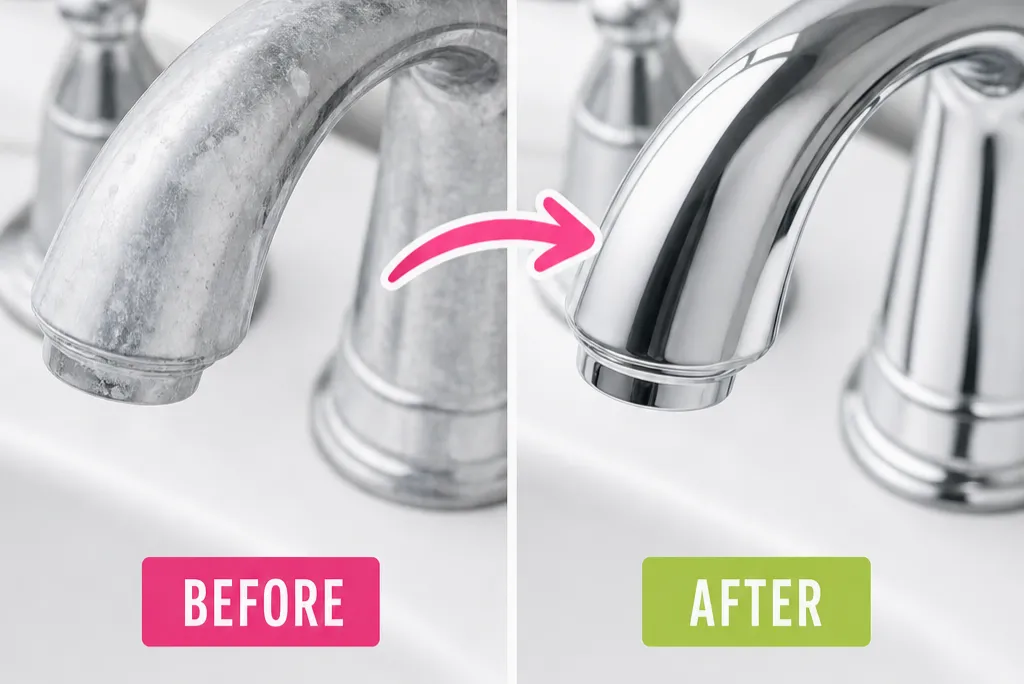
Ever look at your faucet and wonder when it started looking so cloudy and chalky? Those white, crusty rings aren’t dirt, they’re mineral deposits left behind every time hard water dries on the surface. The longer they sit, the more stubborn they get.
The good news is you don’t need anything fancy to get your faucet shining again, just a little vinegar and a bit of patience.
This post contains affiliate links. If you buy through these links, I may earn a commission at no extra cost to you.
What You’ll Need
- White vinegar
- A plastic bag and a rubber band
- Baking soda
- An old toothbrush
- A soft, non-abrasive sponge
- A microfiber cloth
I usually keep this white vinegar bottle around, it works well and lasts a long time.
Let’s Get That Shine Back
Step One: Fill a plastic bag with white vinegar, enough to fully submerge the faucet head or spout, and secure it around the fixture with a rubber band. Let it soak for at least an hour. For faucets with heavier buildup, leaving it on overnight makes a real difference.
Step Two: Remove the bag and give the faucet a gentle scrub with an old toothbrush. You should feel the loosened mineral deposits coming away easily, they won’t need much pressure at this point.
Step Three: Rinse the faucet thoroughly with clean water and wipe it dry with a microfiber cloth. Drying it properly matters here, leftover water droplets just evaporate and start the whole cycle again.
What About Stains That Won’t Budge?
For spots that are still hanging on after the vinegar soak, make a paste with baking soda and a small amount of water. Apply it directly to the stained area, let it sit for about 10 minutes, then scrub gently with your toothbrush or a soft sponge. The mild abrasiveness gives you extra cleaning power without scratching most faucet finishes.
If the buildup has been there for a while and neither method fully clears it, a dedicated hard water stain remover designed specifically for faucets and fixtures will finish the job without the extra scrubbing. These are formulated to dissolve calcium and lime deposits faster than a DIY soak, which is worth it if your faucet has years of buildup behind it.
How Often Should You Be Doing This?
A quick wipe down after each use, just drying the faucet with a cloth, goes a long way in stopping stains before they start. Beyond that, a vinegar soak once every couple of weeks keeps most faucets looking spotless, though homes on well water or very hard water may need it weekly.
When It’s More Than Just a Stain
If you’re noticing reduced water pressure along with the staining, mineral buildup might be clogging the aerator inside the faucet head, not just coating the surface. Unscrewing and soaking the aerator separately in vinegar usually clears this up. If pressure issues continue even after that, it may be worth having a plumber take a look at the pipes themselves.
Frequently Asked Questions
Is vinegar safe to use on all faucet finishes?
It’s safe for most finishes like chrome, stainless steel, and nickel. For brass, gold, or other delicate finishes, it’s worth testing on a small, hidden spot first or checking the manufacturer’s care instructions, since vinegar’s acidity can dull certain coatings over time.
Why do hard water stains keep coming back so quickly?
If they return within days, your water likely has a high mineral content. Wiping the faucet dry after each use slows this down significantly, but a water softener is the only real long term fix.
Can I use bleach instead of vinegar?
Bleach can help with mold or mildew nearby, but it doesn’t dissolve mineral deposits the way an acidic cleaner like vinegar does, so it’s not the most effective choice for hard water stains specifically.